
Why Inversions Matter: The Daily Power of Sirsasana and Sarvangasana in Iyengar Yoga
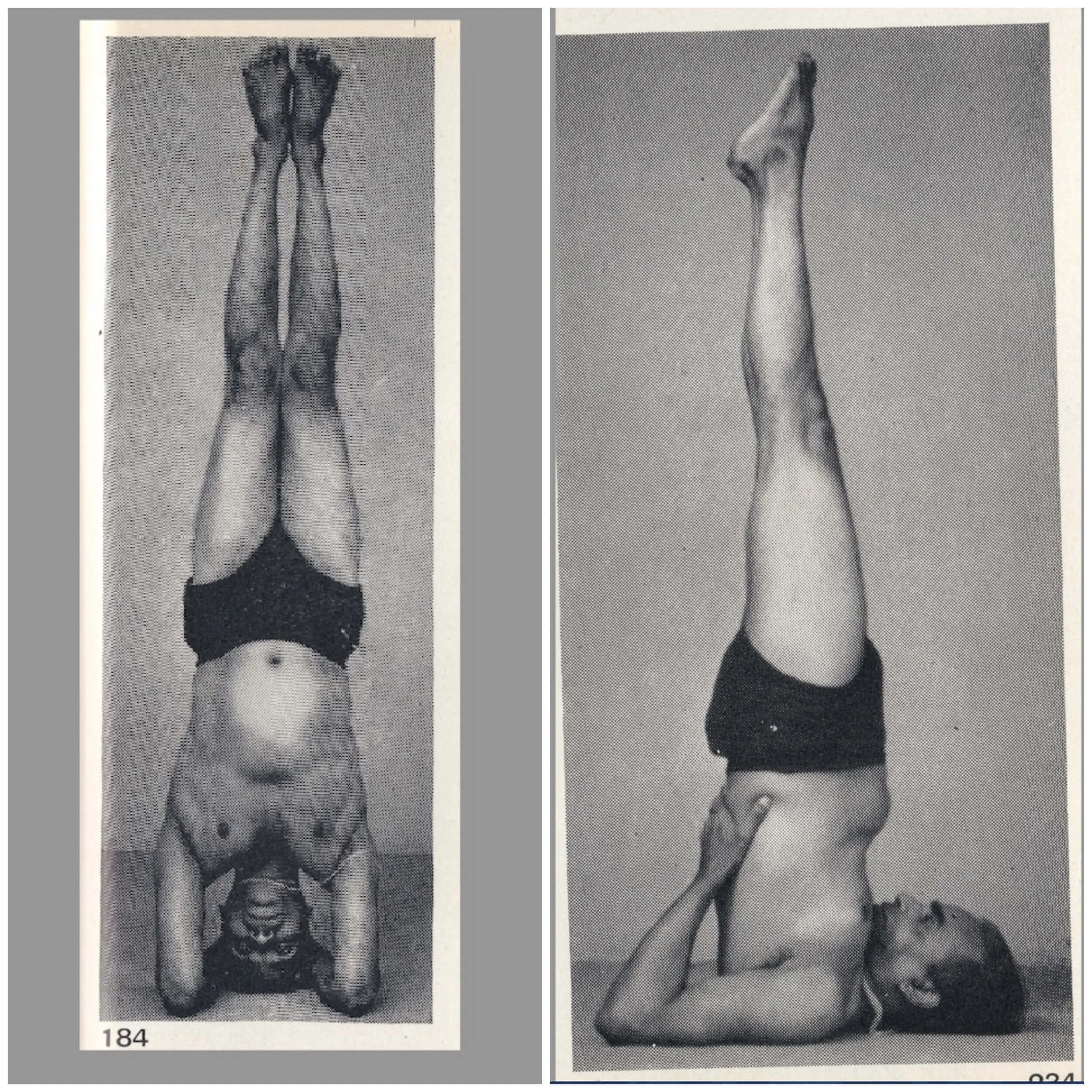
In the Iyengar tradition, few postures carry the depth, refinement, and far-reaching influence of Sirsasana (Headstand) and Sarvangasana (Shoulderstand). These are not simply challenging shapes intended to impress. B.K.S. Iyengar described them as the ‘king’ and ‘queen’ of asanas because of their profound ability to transform the practitioner from the inside out. Their benefits extend far beyond the visible form: they reorganise the body’s inner systems, steady the intelligence, rejuvenate the nerves, and cultivate a clarity of mind rarely achieved through other postures.
For Iyengar, inversions were so essential that he recommended their daily practice. This was not a rigid rule for the sake of discipline alone. It was a recognition that these postures create a uniquely stabilising, therapeutic, and revitalising effect that accumulates with consistency. To understand why Iyengar was so adamant about practising inversions every day, it is necessary to explore the multidimensional impact they have - physically, physiologically, mentally, and energetically.
Reversing Gravity: A New Internal Landscape
In everyday life, we move through the world in only a handful of ways - standing, sitting, walking, occasionally lying down - but always with the head above the heart and the legs below. Gravity constantly exerts its downward force on us. It compresses the spine, drags the abdominal organs toward the pelvic floor, influences circulation, and contributes to mental fatigue. Our bodies are shaped by this continual downward pull, and so are our patterns of breath, movement, and thought.
Inversions offer a complete reversal of this habitual orientation. When the head goes down and the legs lift, the internal landscape reorganises itself. Blood flows in new directions; the diaphragm moves with a different rhythm; the spine elongates in unfamiliar ways; and the brain experiences a quieting effect that is difficult to access when we are upright. Iyengar also often emphasised that inverting the body inverts the mind - it changes our perspective not only physically but also mentally and emotionally.
The first and perhaps most immediate benefit of this reversal is the restoration of energy. Much of the fatigue people experience comes not from dramatic exertion but from the constant effort of simply being upright. The body must work continuously to maintain posture, support the organs, and push blood upward toward the brain. Inverting reduces this expenditure dramatically. Blood returns to the heart with less effort, the organs rest in a new orientation, and the brain receives a renewed, refreshing circulation. Practitioners often report that, after coming down from Headstand or Shoulderstand, they feel more centred and paradoxically more energised, even though the practice itself may have required concentration and physical effort. Iyengar described this as an energy that is rejuvenating rather than draining - an energy that consolidates rather than scatters.
Hormonal Harmony and the Endocrine System
Among the more subtle benefits of inversions is their influence on the endocrine system, which governs everything from metabolism and growth to mood and sleep. Iyengar taught that Sirsasana particularly benefits the glands of the skull, such as the pituitary and pineal glands, because of the increased blood flow and the quietness brought to the brain. The pituitary, often referred to as the ‘master gland’, plays a coordinating role in hormonal function, and Iyengar believed that Headstand supported this regulatory capacity. The pineal gland, associated with circadian rhythms and mental clarity, is also stimulated by the posture.
In contrast, Sarvangasana exerts its influence more directly on the glands in the throat. The chin lock that naturally forms in the pose brings circulation to the thyroid and parathyroid glands. While the physiological details of this interaction continue to be studied in the wider yoga and medical communities, Iyengar observed in decades of teaching that Shoulderstand had a calming, cooling effect on the nervous and hormonal systems. Students often report feeling mentally quieter, emotionally steadier, and more balanced after practising Sarvangasana, and this experiential evidence shaped Iyengar’s understanding of its importance.
Together, Headstand and Shoulderstand were seen as complementary - one uplifting and sharpening the intelligence, the other soothing and harmonising the emotions. Iyengar believed that no other pair of postures could match their combined influence on the internal balance of the body.
Circulation, Respiration, and the Rejuvenation of the Organs
The circulatory benefits of inversions form another major reason Iyengar placed such importance on them. When the body is inverted, blood naturally flows from the lower parts of the body toward the heart and head. This improved venous return relieves stagnation in the legs and pelvis, supports the vascular system, and refreshes the brain. Many practitioners notice that their legs feel lighter and more alive after Sirsasana, as though they have been drained of heaviness.
The respiratory system also receives a unique benefit from inversions. When the spine is lengthened upward and the diaphragm is freed from its usual downward pull, the breath becomes smoother and deeper. Sarvangasana, in particular, softens the diaphragm, broadens the back ribs, and encourages a more expansive, rhythmic breath. Iyengar often referred to Shoulderstand as a ‘motherly’ pose for this reason: it quietens the breath, soothes the nerves, and creates a sense of internal refuge.
These physiological shifts also influence the digestive and reproductive organs. When gravity no longer drags the abdomen downward, the organs are repositioned and refreshed. Improved circulation helps the digestive system function more efficiently, while the pelvic organs receive a new supply of blood that supports their health. Iyengar noted that many digestive complaints, including sluggishness and heaviness, are alleviated through regular practice of inversions.
The Nervous System and the Mind: A Unique Pathway Inward
Perhaps the most profound impact of inversions lies in their effect on the nervous system. Iyengar recognised early in his teaching career that Sirsasana and Sarvangasana do not simply change the physical body - they profoundly influence the mind. When one is upside down, the brain experiences a quietness that arises from both increased blood flow and the intense, focused attention required to maintain the posture.
Sirsasana cultivates an alert and steady intelligence. While it can appear stimulating from the outside, the internal experience is one of deep concentration and clarity. The practitioner learns to be attentive without being tense, awake without being restless. The mind becomes sharp yet controlled.
Sarvangasana, by contrast, generates a gentle, cooling quietness. Iyengar described it as bringing a ‘pacification’ to the nerves. Practitioners often come down from Shoulderstand feeling soothed, refreshed, and emotionally balanced. In moments of anxiety or agitation, Sarvangasana can act as a countermeasure, providing a cooling balm to the nerves.
Together, the two inversions help regulate the autonomic nervous system, balancing the sympathetic and parasympathetic responses. This is one of the key reasons Iyengar insisted on their daily practice. In modern life, the sympathetic nervous system - the ‘fight or flight’ response - is continually overstimulated. Daily inversions help counteract this chronic overstimulation by bringing the brain and nerves into a more restful, receptive state. Over time, this leads to greater emotional resilience, improved mental clarity, and a steadier mind.
A Daily Practice: Iyengar’s Philosophy of Consistency
Given the remarkable benefits of inversions, it is not surprising that Iyengar recommended practising them daily. But his reasoning extended beyond their physiological effects. For him, daily practice cultivated discipline, fostered inner stability, and provided a foundation for deeper yogic study.
Inversions require courage, concentration, and patience. Practised every day, they refine the mind’s capacity to meet challenge without agitation and to remain steady in moments of uncertainty. Iyengar believed that this cultivation of courage in Sirsasana and the cultivation of quietness in Sarvangasana shaped a practitioner’s character over time. They became not just postures to perform, but tools for developing emotional resilience and mental steadiness.
Daily inversions also act as an anchor for practice. No matter what else one chooses to work on - standing poses, backbends, twists, or restorative work - Headstand and Shoulderstand provide a reliable centre point. They create consistency amid variety. Iyengar often compared them to nourishment: just as food is taken daily to sustain life, so too should these postures be practised regularly to sustain one’s inner vitality.
Furthermore, Iyengar felt that inversions prepare the practitioner for pranayama. A steady, quiet nervous system is essential for the safe and effective practice of breath control. Without the foundational stability cultivated by consistent inversions, pranayama can feel either agitating or inaccessible. By practising inversions daily, the practitioner develops the sensitivity and steadiness required for deeper work with the breath.
Seeing Inversions as a Daily Ritual
For practitioners of Iyengar Yoga, Sirsasana and Sarvangasana become more than impressive shapes or occasional challenges. They become a daily ritual of recalibration - a way to rebalance the body’s systems, clear the mind, and steady the emotions. They offer a moment of inwardness, a brief retreat from the pressures of daily life, and an opportunity to reconnect with a deeper sense of self.
Their enormous influence on circulation, respiration, hormonal balance, and the nervous system explains why Iyengar held them in such high regard. But perhaps even more importantly, inversions teach qualities that extend beyond the mat: clarity, courage, stability, patience, and inner quiet. When practised with attention and respect, they become a daily conversation between the body and mind - a dialogue that strengthens, steadies, and refines the practitioner over time.
For these reasons, Sirsasana and Sarvangasana remain central pillars of the Iyengar method. They are the king and queen not because they are difficult, but because they uplift and stabilise the practitioner in equal measure. Their transformative potential unfolds gradually, subtly, and profoundly through daily repetition. In turning the body upside down, they help set the inner world right - bringing calmness to the brain, firmness to the body, and steadiness to the mind.
Interested in making inversions a regular part of your daily routine? Check out our in-person / online weekly timetable here.

James Hasemer
James Hasemer is the Founder and Director of Central Yoga School and a Senior Iyengar Yoga Teacher, Assessor, and Moderator. He has also served on the Iyengar Yoga Australia Board as Teacher Director and Teacher’s Committee Chair from 2021 - 2025.
References
[1] Iyengar, B.K.S. Light on Yoga
[2] Iyengar, B.K.S. The Tree of Yoga
[3] Iyengar, B.K.S. Light on Pranayama
[4] Iyengar, Geeta S. Yoga: A Gem For Women