
Food and Yoga
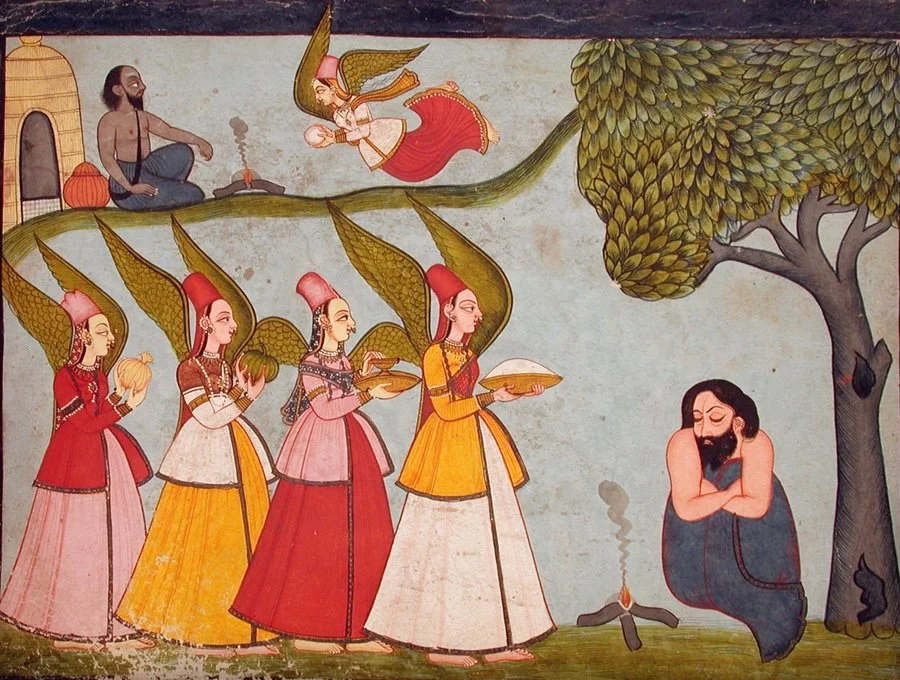
Food is such an ordinary part of our lives that it is easy to overlook its significance. We eat because we are hungry, because it is time for a meal, because something looks appealing, or simply because food is available. Yet from the perspective of yoga, food occupies a much more fundamental place. It sustains the body, and what we eat is taken into the body, digested, assimilated and transformed. In this sense, food does not simply pass through us. It becomes part of us.
The traditional understanding goes further. The food we take in contributes not only to the physical body but also, in a more subtle sense, to the mind. The relationship between food, body and mind is therefore not considered incidental. Food is one of the means through which life is sustained and through which the material world becomes part of our own being.
This gives food a significance beyond its nutritional content. If what we eat becomes part of the body, and if the body and mind are intimately connected, then the question of food becomes a question of relationship. What are we taking into ourselves? How does it affect us? And how attentive are we to that process?
These questions are particularly relevant in the present day because the circumstances in which we eat have changed considerably. We live with an extraordinary abundance of food and with a level of convenience that would have been difficult to imagine in earlier generations. Food can be selected, ordered and delivered with almost no involvement in its preparation. Much of what is available to us has already been washed, cut, cooked, packaged, flavoured and preserved before we encounter it.
The result is that the process by which food becomes nourishment can be largely invisible to us. We see the finished product rather than the ingredients and the preparation that produced it. Convenience has become an important part of the way we eat, and it can create a distance between ourselves and the food that sustains us.
This makes the yogic question of observation particularly relevant. If food becomes part of us, how well do we know what we are taking in?
Food and Practice
B.K.S. Iyengar did not set out to establish a particular diet for yoga practitioners. In his writing on food, he instead describes how his own relationship with food developed through his practice.
His early experience was very different from the abundance that surrounds us today. As a young man, he did not have the luxury of choosing what he ate. Food was limited by what was available and what could be afforded. There was no question of constructing an ideal diet according to theories about what a yoga practitioner should or should not eat.
As his practice developed, however, his food habits became increasingly disciplined by the practice itself. What he ate depended upon what he was doing. When his practice was demanding, his food would change accordingly. Food had to be congenial to the practice.
There is something important in this approach. Rather than beginning with a theory of what everyone should eat, Guruji begins with observation. The body provides information. Practice provides information. Food provides information. The practitioner learns to observe the relationship between them.
This is very much in keeping with the nature of asana practice. We do not practise a pose simply to reproduce its external form. We observe what is happening within the pose: the movement of the body, the breath, the areas of resistance and freedom, the effects of different actions. Through practice we develop the capacity to observe more precisely.
The same intelligence can be applied to food. How does a particular food affect the body? How does it affect the energy available for practice? Does it leave us light or heavy, alert or dull? Is the desire to eat arising from genuine hunger, or from habit and stimulation? These are not questions that can be answered exactly the same way for every person. They have to be observed.
Guruji gives the example of milk, traditionally regarded as a beneficial food, while pointing out that what is regarded as good in principle may not necessarily be appropriate for a particular person or circumstance. The important point is not whether milk is good or bad. It is that the practitioner observes the actual effect rather than relying entirely upon an idea.
This makes his approach to food surprisingly open. There is discipline, but the discipline is not based upon rigid rules. It is based upon attention. The practice itself gradually teaches the practitioner what is appropriate.
The question of quantity also belongs to this observation. Eating too much can interfere with practice, while deliberately depriving the body of food can do the same. There is a need for sufficient nourishment and sufficient space for digestion. Again, the emphasis is on finding an appropriate relationship rather than imposing an absolute formula.
Guruji’s own story is particularly interesting in this respect. He began with very little choice about food, yet through yoga he developed a highly discriminating relationship with it. His circumstances changed, but the underlying question remained the same: what is appropriate?
Food in a Time of Abundance
Our circumstances are almost the reverse. For many of us, the difficulty is not finding food but deciding among the enormous number of possibilities available. We are surrounded by food, much of it inexpensive, convenient and designed to be immediately appealing.
The rise of highly processed food has taken this a step further. Food can now be manufactured through a sequence of processes in which the original ingredients become increasingly difficult to recognise. Flavour, texture, sweetness, saltiness and appearance can be carefully constructed, while packaging and advertising influence our choices before we have even considered whether we are hungry.
This changes the nature of the question. When food is abundant and highly convenient, discrimination becomes more important rather than less. There may be hundreds of things we can eat, but having more choices does not necessarily make it easier to understand what is appropriate for us.
The yogic perspective offers a useful way of looking at this without needing to construct another set of dietary rules. If food becomes part of us, then it is worth becoming more familiar with the food itself. Where has it come from? What are its ingredients? How has it been prepared? What happens when we eat it? How does it affect the body and the mind?
These questions bring us back to the experience of eating rather than to a theory about eating.
There is also value in simplicity. Simple food is not necessarily the same thing as convenient food. A meal made from a few fresh ingredients may require considerably more effort than opening a packet or placing an order. We have to select the ingredients, wash them, cut them, cook them and decide how they will be combined. In doing so, we become involved in the process by which food becomes nourishment.
That involvement can itself cultivate attention.
Preparing food requires us to encounter it before it becomes a finished meal. We see it, touch it, smell it and work with it. We become aware of what we are using and of how much is needed. There is a directness to the process that can be lost when most of the work has already been done for us.
Even small acts of participation can change our relationship with food. Preparing a simple meal, choosing fresh ingredients, making something ourselves rather than automatically reaching for what is most convenient — these can all bring greater awareness to an otherwise largely unconscious part of daily life.
In this sense, simplicity can be a practice of observation.
Food and Nourishment
There is an interesting parallel here with yoga practice itself. We come to the mat and work with the body directly. We observe what we are doing and how the body responds. Over time, the practice changes our capacity to perceive. Things that were previously unnoticed become apparent.
The same process can take place around food. We begin to notice how different foods affect us, not according to an external list of what is permitted or forbidden, but through our own observation. We begin to distinguish hunger from habit, nourishment from stimulation, and what is congenial to practice from what interferes with it.
Guruji’s early experience was one of scarcity, while ours is largely one of abundance. What changed for him was not simply the availability of food, but his relationship with it. As his practice developed, he became increasingly attentive to what his body needed and to what was congenial to his practice.
For the yoga practitioner, this approach may be more useful than the search for a perfect diet. It leaves room for individual differences and changing circumstances while maintaining the responsibility to observe. Food is not simply something we consume. It is something that becomes part of the body with which we practise and the mind through which we experience.
Guruji’s reflections on food eventually lead to an even broader idea: yoga itself can become a kind of food. Practice nourishes us in another sense. Asana feeds the intelligence of the body; disciplined practice feeds the mind; the process of observation and discrimination gradually changes the practitioner.
Food sustains the body so that we can live and practise. Practice, in turn, can transform our relationship with the body, the mind and the things we take into ourselves.
Perhaps this is where the question of food belongs within yoga. Not as another system of rules, but as an opportunity to observe one of the most fundamental processes of our lives. We eat every day. We practise, we observe, and we learn. What we take into ourselves becomes part of us, and through practice we gradually become more capable of recognising what nourishes us.
Interested in making a yoga practice part of your daily routine? Check out our in-person / online weekly timetable here.

James Hasemer
James Hasemer is the Founder and Director of Central Yoga School and a Senior Iyengar Yoga Teacher, Assessor, and Moderator. He has also served on the Iyengar Yoga Australia Board as Teacher Director and Teacher’s Committee Chair from 2021 - 2025.
References
B.K.S. Iyengar, “Yogacharya B.K.S. Iyengar’s Views on Food,” Yoga Vaani, No. 43, March 1996, pp. 11–12.
Prashant S. Iyengar, “Our Scriptures – On Food,” Yoga Vaani, No. 43, March 1996, pp. 13–15.
Yoga Vaani No. 43, March 1996, Iyengar Yoga Australia.